
Responsible Supply Chain Management
Challenges and Opportunities
The company alike. as the linkage between producer to end-user, the Company aims to ensure customers access to safe, high-quality, and sufficient in a timely manner. The Company has strengthened the supply chain’s risk management and collaborated with producers, distributors, suppliers and business partners to enhance the value chain management, ensuring adequate inventory meets consumption needs with responsible sourcing and traceability to upstream.
Supporting the SDGs
Targets and Performance Highlights
-
Long-Term Target by 2030
-
100% of suppliers are assessed ESG risk.

-
100% high-risk suppliers are audited and corrected.

-
-
2025 Target
-
100% Significant Supplier has been evaluated the Environment, Social, and Governance assessment in 2025
-
-
2025 Performance

100% significant supplier has been ESG assessment

100% Tier 1 suppliers and Non-tier 1 suppliers signed acknowledgment and trained.

100% High risk suppliers are onsite audited.

100% of suppliers assessed with substantial actual/potential negative impacts supported in corrective action plan implementation

100% of significant suppliers in capacity building programs
Management Approach and Value Creation
The Company commits to leveraging the ESG along the supply chain with all significant of tier 1 and non tier 1 suppliers. With focused Supply chain ESG program that assess potential ESG risks, and consequently, plan remedial measures to assure sustainability performance along the supply chain. The Company integrated Supplier’s ESG program as one of 2030 Sustainability strategy and closely monitoring program performance. Including clearly communicate and engage the ESG target to all suppliers. The new supplier must comply with ESG assessment before starting the business with the company. This includes all partners, who are required to meet at least 33% of the sustainability assessment criteria and must not fail any critical criteria prior to commencing business with the company.
Supplier's Risk Assessment and Potential Impact to The Company
Business Aspect

As the food safety and product quality are crucial factors directly affecting consumer health, satisfaction, and confidence. Product safety and adherence to quality standards are fundamental factors that directly influence the Company's reputation, credibility, and the trust we maintain with our customer. Furthermore, food safety crises could cause damage to both business operations and stakeholder relationships. Therefore, the Company places the highest priority on delivering quality and safe products while promoting consumer health and well-being to build business sustainability and maintain long-term confidence.
Mitigation
The Company has developed food safety and product quality management processes according to international standards, from raw material sourcing and supplier selection to product delivery. The Company conducts strict supplier and source evaluations (Ethical Sourcing) to ensure products sold come from quality sources. The Company has developed food safety standards following internationally recognized guidelines such as GLP, Q Mark, GHP, HACCP, and GMP Codex to ensure all products. Also implemented a traceability system called "i-Trace" using QR codes to display product origin information. Customers can scan QR codes on packaging to directly access information about production sources, quality inspections, and product safety standards. This system enhances transparency and builds confidence among consumers and operators. Furthermore, the Company closely monitors disease situations, collaborating with government agencies and relevant organizations to track news and develop effective preventive measures. Safety management covers prevention, control, and concrete crisis response to ensure the Company is prepared to handle and reduce impacts from food safety crises.
Environment Aspect
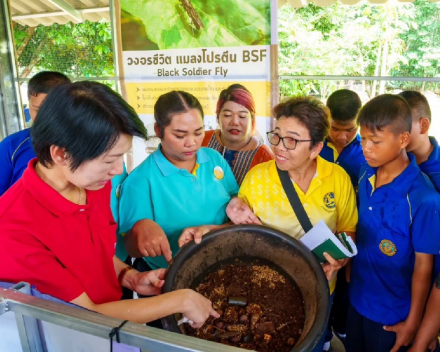
Risk of environment impact to supplier's operation which is Climate Resilience risk refers to the risks arising from climate shifts and their associated impacts, which can affect business operations, supply chains, and long-term sustainability. The environmental crisis i.e. water, clean air etc. caused by climate change represent a key challenge affecting businesses across all sectors. The Company recognizes potential impacts on business operations, energy consumption, and environmental management costs. These changes not only increase pressure on sustainable business operations but also affect corporate image in stakeholders' views.
Mitigation
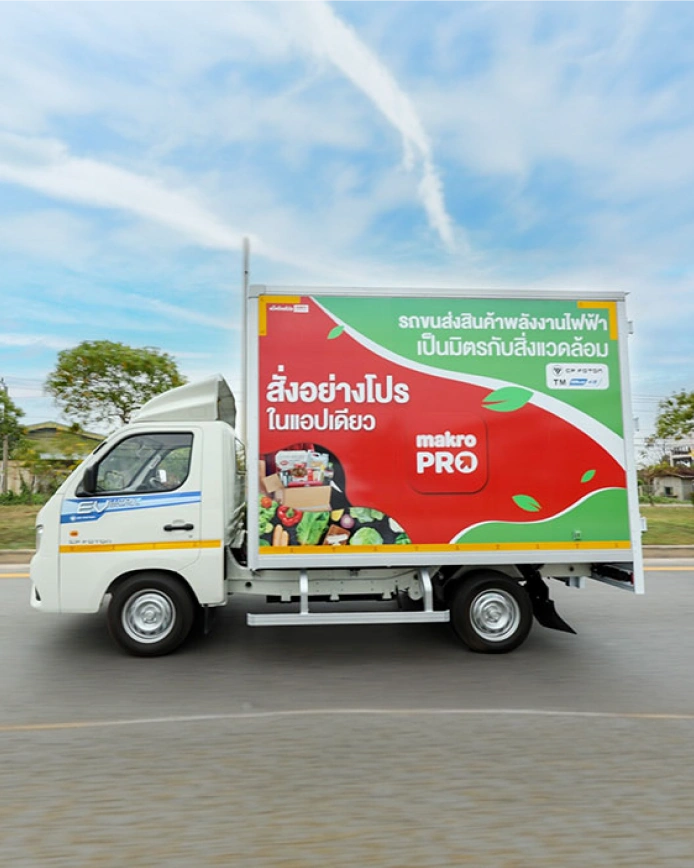
The Company enhance suppliers and contractors—production, transportation, storage, distribution, and sales—in jointly reducing carbon emissions. This is achieved through activities such as the Supply Chain Sustainability Excellence Award. Furthermore, the greenhouse gas reduction target setting is the one of the supplier's annual evaluation criteria. Additionally, the company implements the "Better Life for Highland Farmers" project. This initiative aims to explore, educate, and support farmers in the northern and northeastern regions, which face chronic drought issues, to improve agricultural production efficiency and prevent food loss. In collaboration with the Department of Agricultural Extension and various universities, the company encourages farmers to adopt organic farming practices for a better quality of life, such as using drip irrigation systems, eliminating pesticide use, and transitioning to organic farming. Furthermore, the company educates farmers on cultivating water-efficient and high-demand fruits and vegetables to prevent food loss and purchases produce from participating farmers for distribution nationwide.
Social Aspect

Risk of social impact from supplier's operation such as the Human rights violation risk refers to the risk of non-compliance with international human rights standards, potentially leading to legal, reputational, and stakeholder relationship issues. Human rights and labor practices are crucial issues in sustainable business operations. Failing to prioritize human rights and labor management may affect organizational credibility and lead to human rights violations in business activities, including risks of discrimination and workplace harassment, impacting operational efficiency and company image. Non-compliance with legal requirements or international labor standards may result in legal consequences and loss of stakeholder trust, including customers, employees, and business partners.
Mitigation
Human Rights Due Diligence (HRDD) processes are implemented to assess and improve human rights policies, including establishing a human rights working team responsible for risk assessment, impact evaluation, and performance monitoring. The Company communicates and trains supplier on human rights policies The Company conduct human rights risk assessment including supplier and contractors. Additionally, performance results are disclosed in annual reports to ensure transparency and credibility with stakeholders. In occupational health and safety, the Company aims to achieve zero lost-time accidents by 2030, developing safety management systems aligned with ISO 45001 standards and implementing 10 Life-Saving Rules to strictly prevent workplace accidents and diseases. The Company also provides defensive driving and safe forklift operation training courses, including continuous workplace safety inspections and improvements.

Supplier ESG Program
The Company commits to leveraging the ESG along the supply chain with all significant of tier 1 and non tier 1 suppliers. The supplier ESG program assesses the potential ESG risks, consequently, correction and remedial action to assure the compliance along the supply chain which is integrated as one of 2030 Sustainability strategy and oversighted by Board of director level.
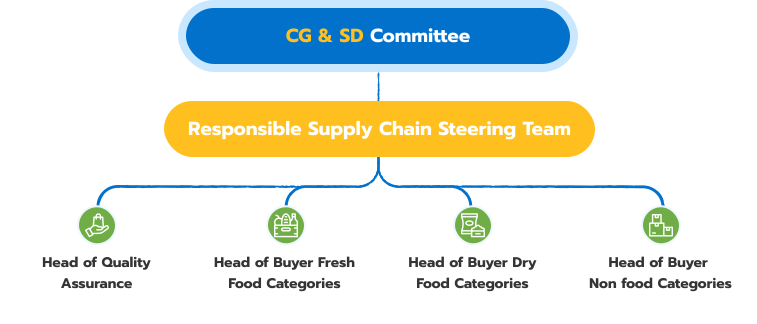
The CG & SD Committee (BOD level) is the highest accountable decision-making body for oversight of implementation of supply chain ESG program. The steering team members are heads of the QA, buyers, and operations departments. The program and KPI are setting to ensure the purchasing practices towards suppliers are continuously reviewed to ensure alignment with the Supplier Code of Conduct and to avoid potential conflicts with ESG requirements. The company’s buyers, QA and operation team are trained their roles in the supplier ESG programs.
Altogether, the suppliers are trained and notified that they are excluded from contracting if cannot achieve minimum ESG requirements within a set time frame (score >33% before starting contract or > 55% within 2.5 years to continuing the contract). And the suppliers with better ESG performance are preferred in supplier selection and contract awarding.
Supplier ESG Program Implementation
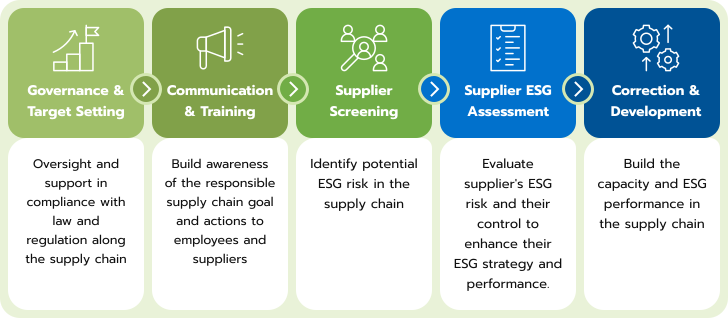
The Company's Supply Chain Management Approach
The Supplier’s Code of Conduct manual and training VDO with subtitle are publicly on The Company’s website and applied to all suppliers across all countries. All the suppliers must be trained and sign an acknowledgment by their top management or assignee to accept these ESG criteria as the business contract terms and conditions
Supplier Screening
The significant supplier is a supplier that is identified as a potential sustainability risk supplier. The screening of the significant suppliers by reviewing potential or actual suppliers’ risks of the negative ESG impacts and also business relevance risks or a combination of both. The risk covers factors of country, sector, and commodity-specific risks are considered.
| 2025 Result of Supplier Screening | |
|---|---|
| Total number of Tier-1 Suppliers | 3,490 |
| Total number of Significant Suppliers in Tier-1 | 1,049 |
| % Total spend on Significant Suppliers in Tier-1 | 63.52% |
| Total number of Significant Suppliers in non-Tier-1 | 3 |
| Total number of Significant Suppliers (Tier-1 and non-Tier-1) | 1,052 |

Supplier Assessment & Development
ESG Assessment
All supplier must pass the ESG desk (online) assessments which is the systematic verification of evidence on the company’s digital platform and transparent scoring. The assessments follow SMETA and ISO 17025 and ISO 20400.
All suppliers are informed of the exclusion from contracting if they cannot achieve minimum ESG requirements within the set timeframe (score >33% before starting contract or > 55% within 2.5 years to continuing the contract). Suppliers with better ESG performance are preferred by applying a minimum weight to ESG criteria in supplier selection and contract awarding.
Criteria for Onsite Audit
Any supplier who has low score (< 33%) and/or potential ESG risk in any criteria i.e. product safety & quality, human rights, labor practices, environment impact or breach case with community, etc. will be conducted the on-site assessments which carried out by the company’s audit team and/or independent accredited auditing body (3rd party assessment). The high-risk supplier must have the correction within 12 months and quarterly update the progression.
Promoting Sustainability Certified Product
Over the past year, the Company has placed strong emphasis on encouraging its supply chain to produce and deliver products that are certified under various sustainability standards. As a result, in 2025, the volume of purchases of certified products has increased, as outlined below.
Certification of Agricultural Crops
| Agriculture Crop | Certification or Accreditation | % Purchased of certificated product | % Exposure |
|---|---|---|---|
| Palm Oil | RSPO, RSB, ISCC | 100 | 2.17 |
| Soy | RTRS, Pro Terra, CRS, ISCC+ | 81.26 | 1.87 |
| Sugar | BON Sucro, Fairtrade, Vive | 92.25 | 1.09 |
| Cacao | Fair trade, UTZ, Rainforest Alliance, Bird Friendly | 42.91 | 0.51 |
| Coffee | IRTAC, SRP, Global G.A.P, BRC, Rainforest Alliance, UTZ, Fairtrade | 33.51 | 2.86 |
| Cereal | GAP,FTA Gold, Global G.A.P, BRC | 42.28 | 2.54 |
| Cotton | Fair Trade-certified cotton BCI, GOTS, OCS, GRS, RCS , Global organic textile standard | 12.34 | 0.44 |
Note: % Purchased of certificated product per total purchasing agricultural crops. % Exposure = Purchased argricultural crops per total purchasing.
Certification of Animal Product
| Animal product | Certification or Accreditation | % Purchased of certificated product | % Exposure |
|---|---|---|---|
| Aquaculture | ASC, G.A.P., BAP, Non-GMO, BRC, GMP | 31.16% | 0.47% |
| Cattle | G.A.P., AAWC, BRC, GMP | 20.17% | 0.53% |
| Dairy | G.A.P., AAWC, BRC, GMP, Fairtrade | 30.87% | 3.82% |
| Swine | G.A.P., AAWC, BRC, GMP, Fairtrade | 76.41% | 7.81% |
| Poultry & Egg | G.A.P., AAWC, BRC, GMP | 59.35% | 6.96% |
| Wild fishery | MSC, MSC Chain of Custody, G.A.P., ATBF | 39.31% | 1.47% |
Note: % Purchased of certificated product per total purchasing agricultural crops. % Exposure = Purchased argricultural crops per total purchasing.
Promoting the Animal Welfare and organic products
The company’s commitment and engagement to animal product suppliers must be audited and qualified with QA and product safety criteria before trading and reassessment every 3 years to ensure the product is safe for consumers.

100%
Not to use the antibiotics

100%
Not to use GMO or cloned animal

100%
Not to apply growth-hormone substance

100%
Lab sampling in every product lot
Our Projects
"Safe Oranges Save Thai Smile 12th Consecutive year" Project


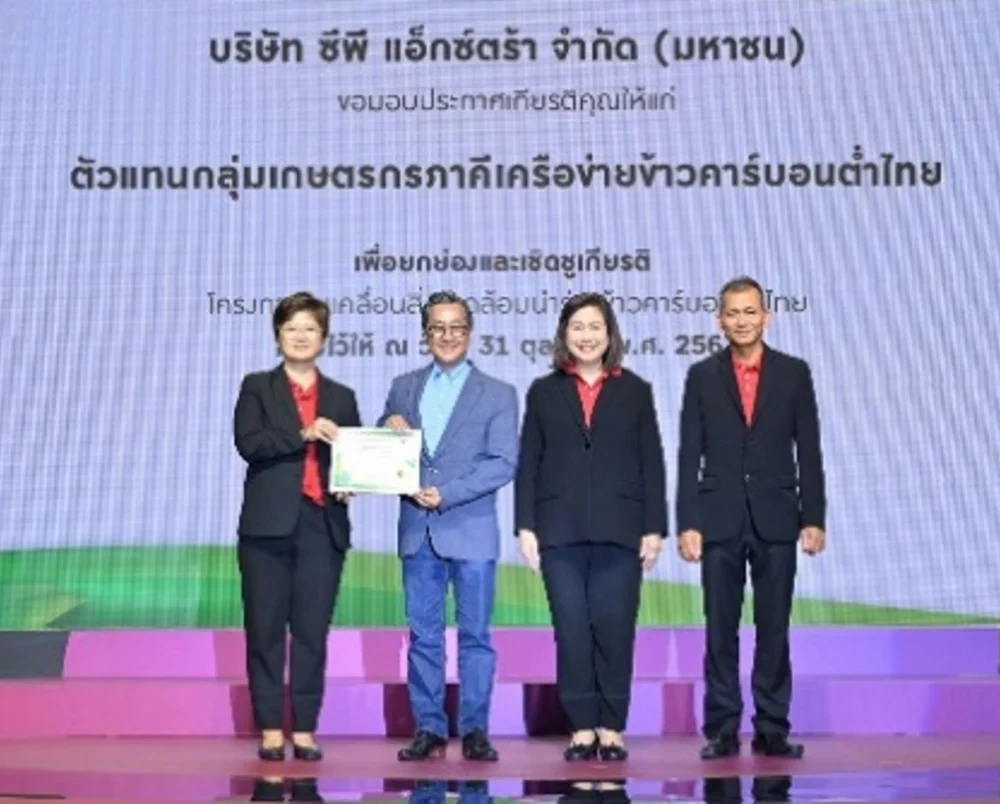
Low Carbon Rice Project
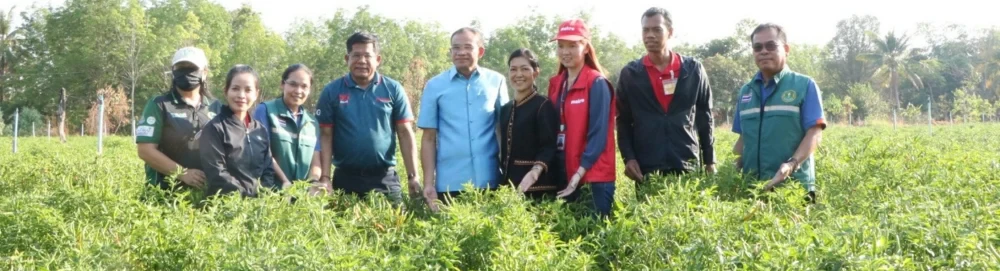
For Better Life of High Land Farmer Project
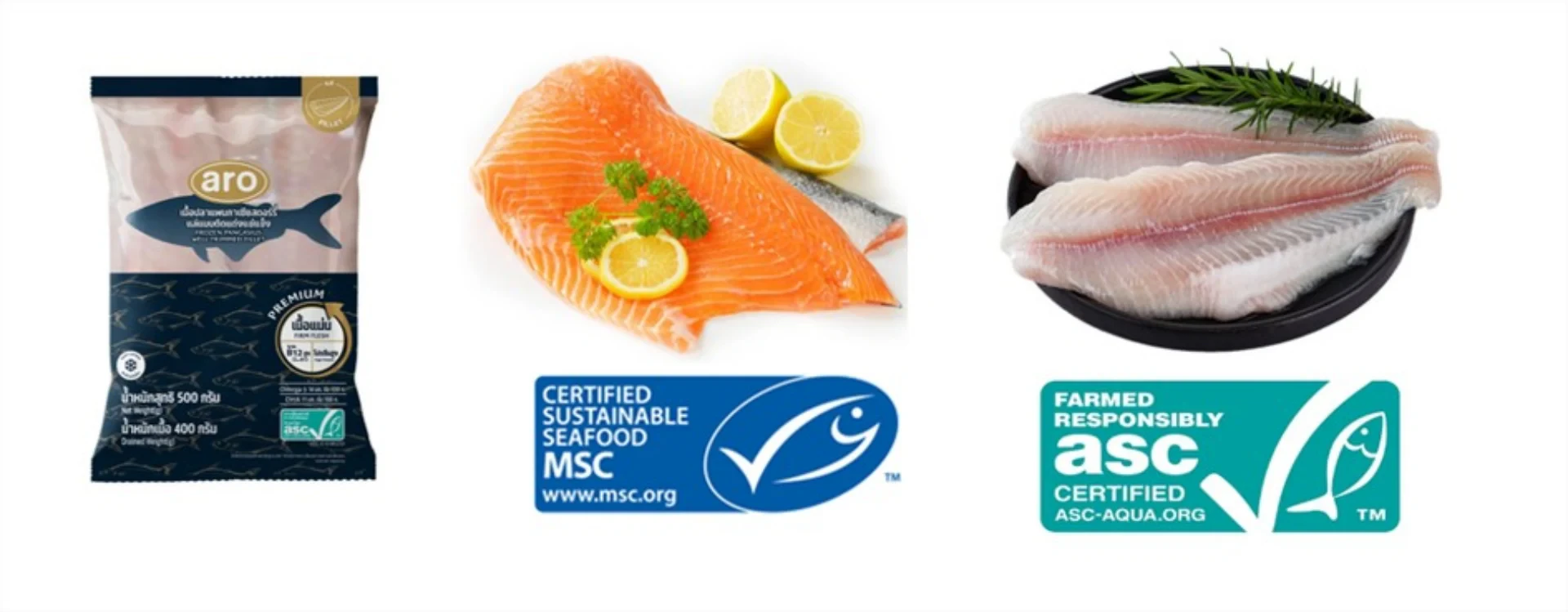
Own Brand ASC & MSC Certified

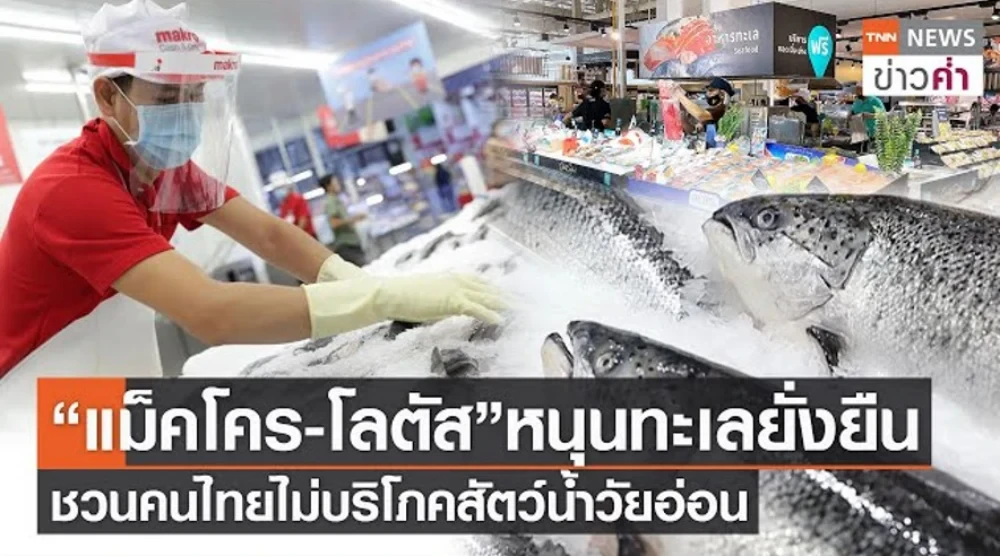
"Do not catch, do not buy, and do not sell - juvenile marine animals“
Innovation project “Sustainable packaging with banana stems”
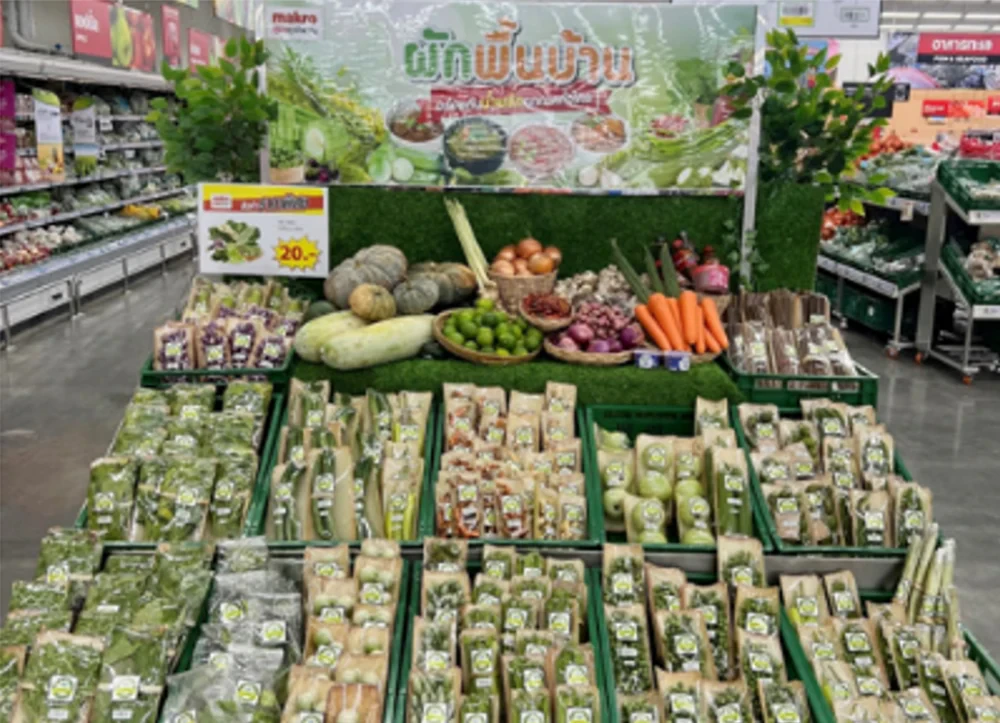
“Shelf Ready Display” Project

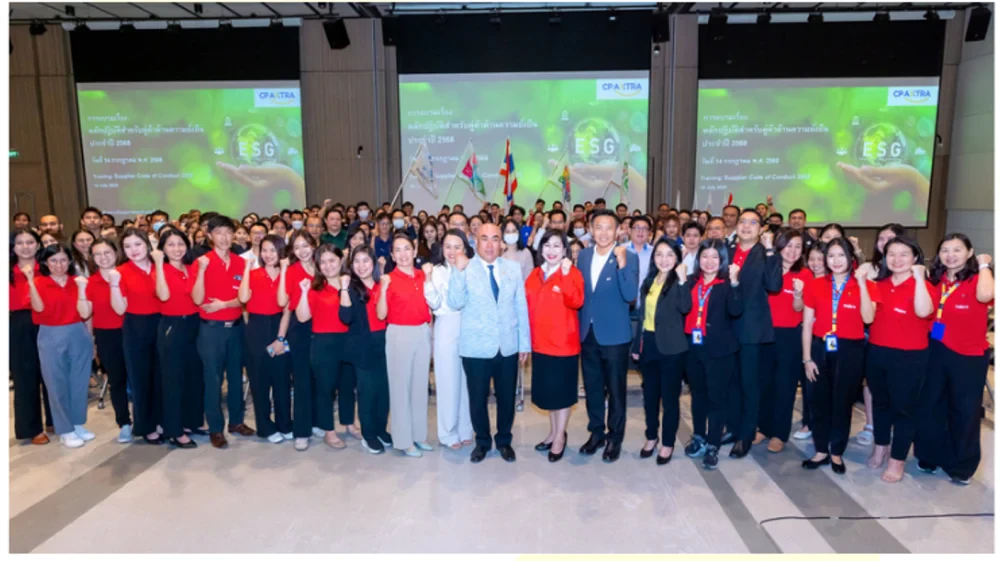
Responsible Supply Chain Development: Environmental Aspects and Supplier Code of Conduct
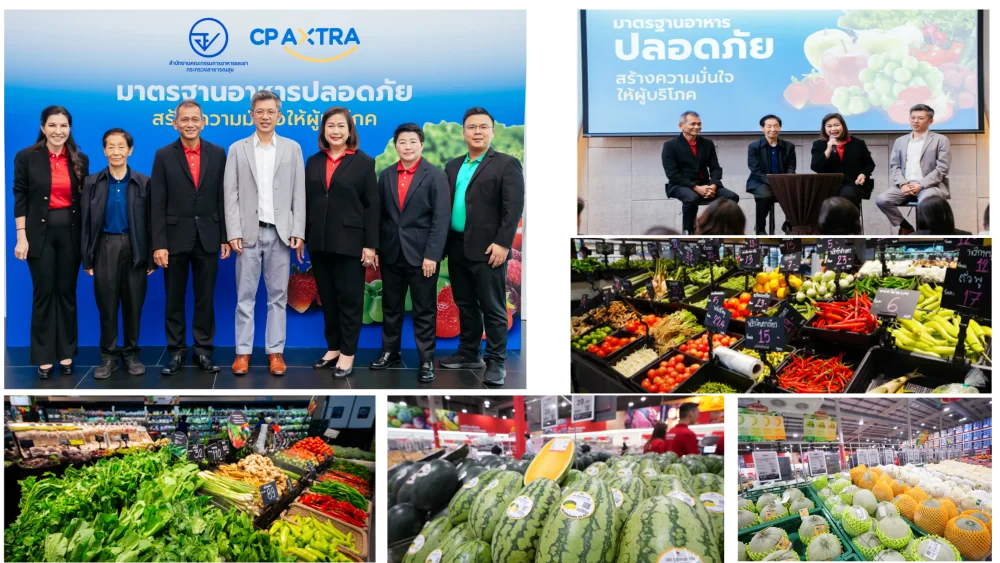
“CP AXTRA Teams Up with Food and Drugs Administration (FDA) To Elevate Food Safety and Build Consumer Trust”
"Sustainable Tuna-Sourcing" Project

“Sustainable Fishery” Initiative
Cage Free Egg Product