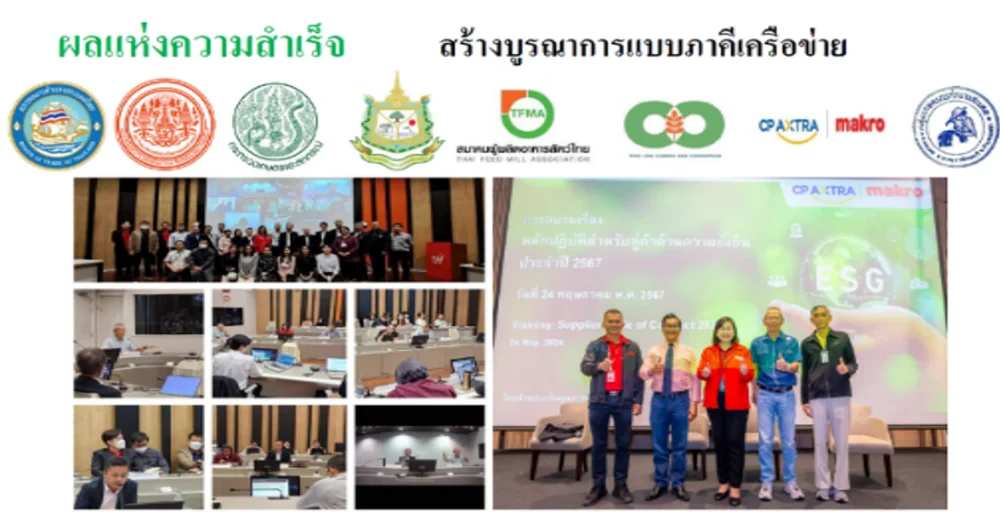
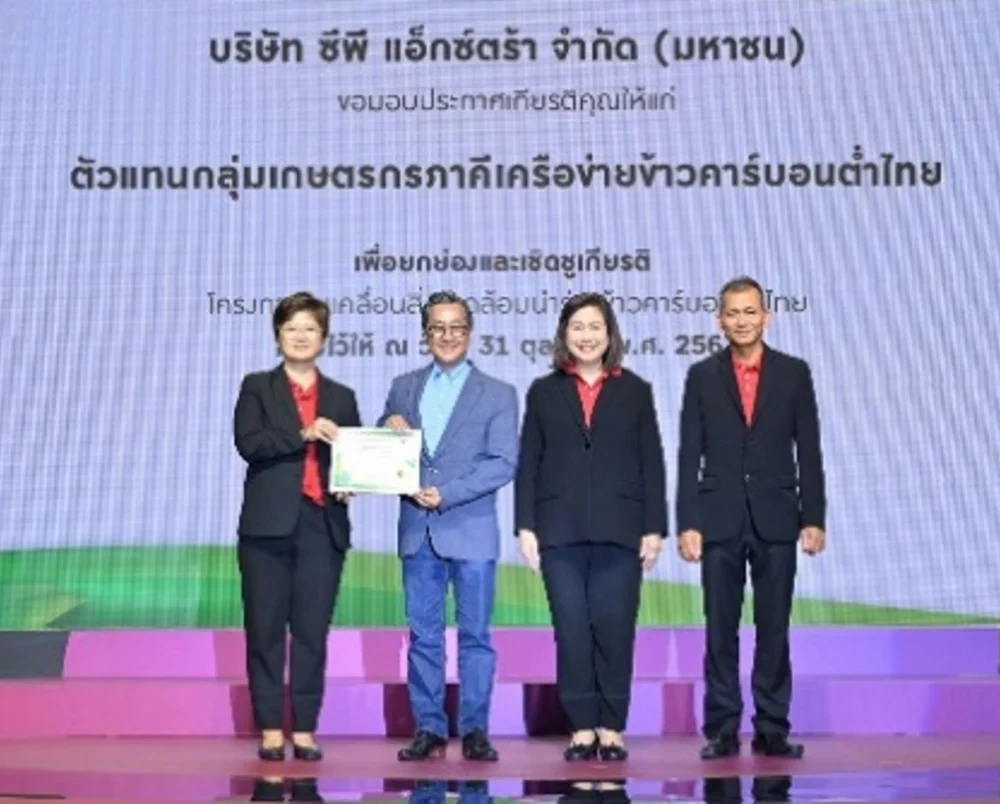
The company recognizes the importance of developing the domestic agricultural supply chain and has integrated collaboration across multiple sectors—including farmers, agricultural and environmental experts, rice producer groups, Nakornluang Rice Mill, and retail branches—to drive the “Low-Carbon Rice” pilot project in Kamphaeng Phet Province. This initiative adopts the Alternate Wetting and Drying (AWD) process that help water usage and GHG emissions.
A key component of this project is the shift from traditional rice farming, which requires continuous flooding, to the Alternate Wetting and Drying (AWD) technique. This method significantly reduces water consumption (38% compared to traditional method) by allowing the field to dry out periodically before being re-flooded. This not only lowers water demand but also prevents water conflicts with other users in the area. Other practices include using organic fertilizers instead of chemical fertilizers, efficient water management, and proper handling of agricultural waste.
This multi-party engagement with suppliers, municipalities, academia, and the government helps to reduce misunderstandings of water demands and consumption, align objectives, and prevent potential disputes. The initiative aims to mitigate climate change impacts, respond to the growing demand of environmentally conscious consumers, add value to target premium rice markets, and prepare stakeholders for international regulations linking greenhouse gas emissions to market access